Showing posts with label Hmawbi. Show all posts

Saturday, 6 May 2017

Discipline at Burmese Monasteries

There are at least two ways that a visitor may be able to glean some insight into how serious and disciplined a monastic school is only moments after entering. 

The first is, are there leaves or dirt on the walkways? At monasteries with good discipline, the morning usually begins with sweeping of the grounds. 

The second question is, what care do monks and nuns take with their shoes when entering buildings? This immediately indicates what they are taught and encouraged by their teachers. 

The following three photos illustrate this. The first is of the monastic school Sasana Won Saung in Hmawbi, the second of Setkya Ditthi Nunnery in the Sagaing Hills. The third is from outside of Mandalay but for our purposes shall be nameless, and shows a mixed (monk/nun lay/monastic) school in which that discipline is clearly not followed.


Saturday, 25 February 2017

Liberation through the Kanni Method of Vipassana and Samatha


The following was written by Dr. Khin Maung Win, describing his experience at Bodhi Aye Nyein Yeiktha. They teach within the tradition of Kanni Sayadaw, who taught Sayadaw U Wayama, the famed presumed Arahant of Prekhemma Monastery in the Sagaing Hills. Kanni Sayadaw 
was also a younger contemporary of Ledi Sayadaw, and a meeting between the two great monks is memorialized in a statue exhibit in Kanni village.


“I practiced the Insight meditation by means of the mindfulness of breathing. At the first stage, I had to practice to comprehend the nature of materiality. The observing mind penetrated the body. The brain, the skull, the heart and the spinal cord and ribs where burnt [sic] and destroyed, the skull became a fine gauze, the skeleton was broken down. When the observing mind pin-pointed at the toughness of the body, the feeling of pains disappeared and the mind knew that the materiality was subject to decay.

Then I practiced to comprehend the immateriality. The observing mind highlighted on the severe pain. It was composed of many small pains. Each small pain showed their own nature of pricking, hotness, numbness, coldness, hardness, and each of which were in flux. The whole body became minute particles and then disintegrated. Only the observing mind was left in the sense of knowing.

When I pracied to comprehend the condition factors of mind and matter, the whole physical body changed to the particles, some of which were in tremendous motion and some in slow motion. At that stage, the last eleven past extensces were seen in my mind’s eye. The first four existences were a tiger, a horse, a goat, and a cow. The fifth was a woman. That woman reverended [sic] a high priest and did a lot of wholesome deeds with the intention of becoming a monk in the future life.

As a result of good deeds the next life was a monk. That monk trained himself and followed the disciplines and rules for monks. The seventh life was a god. The successive life was an acestic who took delight with sensual pleasure. The next was a pig. That pig wanted to be free and wished to run like a rat. So, the tenth life was a rat. It was afraid of cats and wanted to be a cat. The eleventh was a cat. That cat lived in a monastery. It was familiar with the Triple Gem and never chased the rats. The wholesome deeds done in the monk’s life reinforced to be reborn in the human wold.

One day, when that cat suffered from the disease of ageing, a lay woman came to the monastery and made donation. Soon after the woman went back hom then the cat died and followed the woman. That woman became my mother in the present life.

During the practice of Insight meditation, I saw the blood flowing thorugh every nook and corner of the body, and everything in the body were in flux. More than that I saw the dissolution of all parts of the body. The whole body was seemed to be [sic] a fearful disaster or a great enemy. I felt weariness of living with that socalled body. I wanted to liberate [sic] from that pyscho-phyiscal aggregates.

I kept on practicing with steadfast mindfulness to observe the phenomena of mind-matter processes in all four postures. I encountered the intense light beams, more brilliant than the light image, appeared in me and I felt the great rapture.

Once the physical body transformed into particles and disappeared while the observing mind rapidly moved to a far distance… I observed the rise-fall phenomena for half an hour, then I was in void, and enjoyed a peaceful feeling. When the observing mind reappeared, I observed the nature of impermanence.”


Sunday, 8 November 2015

Dhammaduta Jetavana Monastery


Dhammaduta Jetavana Monastery was founded in Hmawbi by Sayadaw U Say Kain Da in 2000, and is in the illustrious tradition of the highly revered Dhammaduta Sayadaw. The wide monastery grounds feature large expanses of forested lands that are quite peaceful and quiet. The monastery is used for scriptural study and teaching young novices, however study sessions may be available for foreigners with a proper meditation visa. The Sayadaw, an engineer in his lay life, speaks good English and is currently a professor of meditation at the International Theravada Buddhist Missionary University in Yangon. A plan is underway to build a very large meditation hall, along with comfortable accommodations for 500 meditators. The monastery is on the right, several kilometers before Hmawbi when coming from Yangon. Foreign yogis may apply for meditation courses, long retreats, or study classes in person or by phone.

Monday, 10 August 2015

Thae Inn Gu Sayadaw and Meditation Monastery


Born in March 1913, U Aung Tun married young and had three daughters. His first wife died, and subsequent two wives left the marriage to become nuns. U Aung Tun’s first profound awakening occurred upon reading Sun Lun Sayadaw’s biography. Like him, this highly revered monk had little educational background, and yet achieved the greatest spiritual heights— prompting U Aung Tun to wonder, “why not I?” This, combined with having received a sharp blow to the head while attempting to rob a house, prompted the 46 year old man to travel to his sister’s home in Kyaung Ga Lay and follow nine precepts for nine days. Here, from 4 a.m. until 10 p.m. every day he practiced ānāpāna meditation in the sitting position, not changing his posture unless having to meet the calls of nature. He developed profoundly during this time, and this determination and perseverance would go on to characterize his future teaching style.

Following this period, he continued his practice, in later months moving to his nephew’s home, where it is believed he attained the third state of enlightenment. Once, he described viewing his past lives “in his vision… like a television series.” He later decided to go to Twante to meditate alone in a forest, and accepted an offer to have lunch at the home of U Su Ya in Hmawbi, and it is here where he is believed to have become fully liberated—nearly 21 months after beginning his ardent practice. Sayadaw U Okkatta, as he was now known, came to establish himself here, and soon thousands of Burmese disciples were coming to pay their respects and learn from him. The Sayadaw also started to travel and give Dhamma talks, where audiences numbered as much as 3,000.

Thae Inn Gu Sayadaw drew particular inspiration from the Buddha’s vow at the time of his enlightenment, Ayoo kye kye, ayay khan khan lu yin thay ma thay yin tayar ya, or “I will try [either until my] bones dry up [or until] the case is accomplished,” and he exhorted his monks, too, to work until enlightenment or until their bones broke apart. In his teachings, this translated into encouraging longer periods of sitting without changing posture, starting with a minimum of two hours and building up from here.

The Sayadaw passed away at the age of 60 on July 8th 1973, after which the body was kept in state for three years. Disciples say that despite not being embalmed, the body did not become rotten during this time, but “dried up,” and eventually left seven relics, two from the eyes, four from the bones, and one tooth. They were once taken to a jeweler to be examined without prior explanation, and the jeweler thought they were real precious gems! However, when looked at more closely, it became apparent that vein-like lines were also present. These are on display annually in April and are believed to emit light from the pagoda. 


Thae Inn Gu Sayadaw has influenced many great monk of today, including the Thabarwa Sayadaw in Than Lyin. Discourses of the great monk can be found here.


Saturday, 20 September 2014

Panditarama Forest Centre


Built on more than 100 acres of forest and containing three natural lakes, this center, presided over by Sayadaw U Pandita, has beautifully landscaped gardens and other areas (including one long terrace) conducive to walking meditation. The site was originally covered with bamboo groves, and then replanted as a rubber plantation. Some of the buildings are a bit rustic, although renovations are currently underway that will allow each meditator his or her own individual room or cabin, with an adjoining bathroom.

The area of where this center now sits was quite important to U Pandita’s own early spiritual training. He first studied as a young monk at the nearby Mahabodhi Forest Monastery. For many years, he thought of building a forest meditation center in this area, and in recent years he was able to fulfill that dream, creating a center that now welcomes large numbers of Burmese and foreign yogis. As one yogi shared, “The stillness, clean air, freshwater springs, and fertile land create almost perfect conditions for a meditation center.” 


Monks on alms round in Hmawbi

The center serves nutritious vegetarian fare and freshly made local juices in the evenings. Hse Gone Center usually conducts 60-day silent meditation retreats each winter, during which the Sayadawgyi himself stays at the center to monitor progress and deliver daily Dhamma talks. In the words of one yogi, these are “based on Sayadaw U Pandita's deep practical experience and understanding of the Theravada Buddhist canon… [they] provide yogis with the practical and theoretical information they need for intensive satipaṭṭhāna vipassanā meditation practice.”

Yogis can get to the Hse Gone center by taxi, and can inquire about other transportation options from the center. For public transport, take the public bus towards Bago and get off at Sae Mi Gone Hill around 10th Mile; the center is just under two miles away from there. The telephone is 0949450787, 095300885, 095302500.


Novices study the scriptures

Monday, 24 March 2014

Abhidhamma Course at Sitagu during 2014 Rains Retreats


An older female yogi pays respects as monks walk past her


There is a belief in Burma that the Abhidhamma is so important, that when the Buddha's teachings start to disappear from the world, this will be the very first to be lost. Therefore, the need to preserve the Abhidhamma takes on a considerable importance in order to preserve the Sasana.

There is also an old tale, likely more mythology than reality, about a ship carrying the three books of the Tipitika crashing in the waters. Each one was saved, with the Abhidhamma Pitika going to Burma, the Vinaya Pitika going to Thailand, and the Sutta Pitika going to Ceylon (Sri Lanka). This ancient tale is often repeated today in Myanmar, as if to describe the great importance it plays in dhamma practice and Buddhist life in the Golden Land.

Study of Abhidhamma is possible only under the assistance of a skilled teacher, for the material is so dense that many first-time readers struggle to understand its profound meaning. While Abhidhamma study is to be found throughout modern Myanmar, it is rare to find an opportunity to do so in English.

This is where the extraordinary opportunity being provided by Sitagu Academy Rector Dr. U Kumara comes in. For the first time in the Academy’s history, a two month Abhidhamma course will be offered in June and July to 20 foreign meditators.

For more information about this course, and to register, please see here.


Sandals laid out neatly reflect the discipline found among young novices at Sassana Won Saung in Hmawbi


Sunday, 2 March 2014

A Diary of Pilgrimages

Three young Burmese boys join a group siting at a pagoda with the pilgrims

42 days of pilgrimages have now been completed, and two groups of devoted yogis have now seen the best that Burma has to offer, with many lives transformed in the process. Some pilgrims ordained and are still in robes, with others coming in the next few weeks, months, or even years with a similar intention in mind. Others have grasped the dhamma in more profound ways than was possible in one's home country, and have returned to their local community to share their wealth of experience, understanding, and inspiration.

The following guide shows the diary entries recorded for the two yatras. The majority of the first diary entries were made by Kory Goldberg, a Canadian yogi and author of Along the Path. The majority of the second yartra entries were made by an anonymous American pilgrim.

While no yatras have as yet been confirmed for the following winter of 2015, there are upcoming opportunities for those interested to join part on such excursions in the near future. U Kumara at Sitagu Academy has indicated an interest in hosting Abhidhamma workshops in English for any interested foreigners in the Sagaing Hills in June, and brief ten-day dhamma trips will be organized both before and after these courses for those wishing to attend. Finally, one may also contact Muditā Works  (the agency which arranged for the entire following two pilgrimages) at any time to arrange such a dhamma trip according to the wishes of one's group.


The ruins of Htut Kaung Monastery in the Sagaing Hills. This was one of the world's first meditation-oriented monastery 

Pilgrimage #1
Day 1: Yangon
Day 2: Pyaw Bwe Gyi
Day 3: Yangon and Hmawbi
Day 4: Hmawbi
Day 5: The Road to Mandalay
Day 6: Mandalay
Day 7: Kyaukse and Mandalay
Day 8: Mandalay and Monywa
Day 9: Monywa
Day 10: Monywa, Sain Pyin Gyi, and Ingyinbin
Day 11: Ingyinbin
Day 12: Ingyinbin
Day 13: Ingyinbin
Day 14: Ingyinbin, Shwebo, and Sagaing Hills
Day 15 and 16: Sagaing Hills
Day 17: Mingun
Day 18: Sagaing Hills and Yangon
Day 19: Yangon
Day 20: Yangon

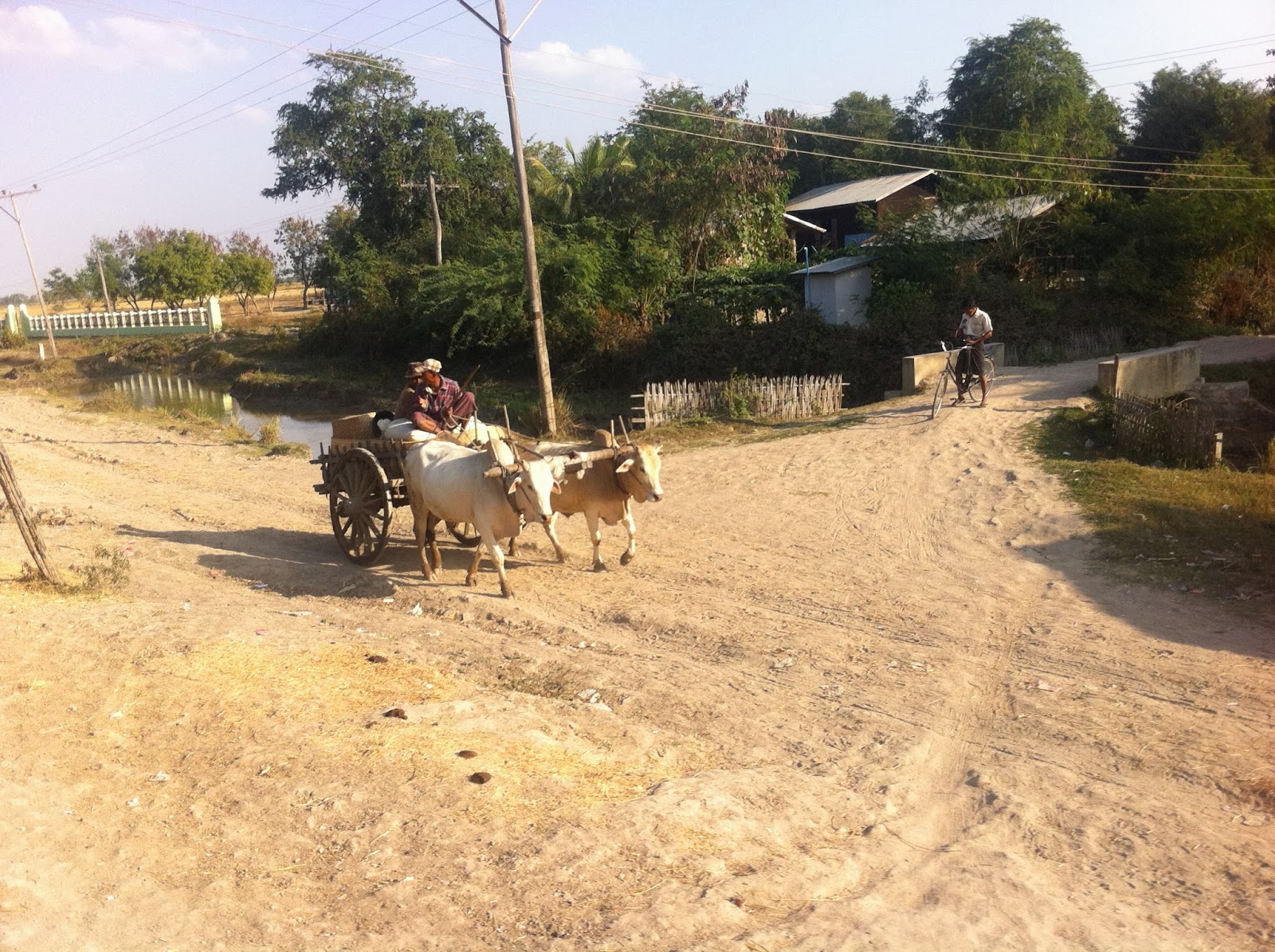
A typical rural Burmese scene

Pilgrimage #2
Day 1: Yangon
Day 2: Pyaw Bwe Gyi
Day 3: Yangon and Hmawbi
Day 4: Hmawbi
Day 5: The Road to Mandalay
Day 6: Mandalay
Day 7: Kyaukse and Mandalay
Day 8: Mandalay and Monywa
Day 9: Monywa
Day 10: Monywa, Sain Pyin Gyi, and Ingyinbin
Day 11: Ingyinbin
Day 12: Ingyinbin
Day 13: Ingyinbin, Shwebo, and Sagaing Hills
Day 14: Sagaing Hills Nunneries
Day 15: Within the Sagaing Hills
Day 16: Sagaing Hills One Day Sitting
Day 17: Mingun
Day 18: Sagaing Hills and Yangon
Day 19: Yangon
Day 20: Yangon

Pilgrims travel back from Mingun to Sagaing

...one may ask, what is so special to have to come across the world to Burma anyway, when the practice is basically inside already? Harold Fielding, a British administrator, provided an answer to this question in 1898 in "Soul of a People":

"To hear of the Buddha from living lips in this country, which is full of his influence, where the spire of his monastery marks every village, and where every man has at one time or another been his monk, is quite a different thing to reading of him in far countries, under other skies and swayed by other thoughts. To sit in the monastery garden in the dusk, in just such a tropic dusk as he taught in so many years ago, and hear the yellow-robed monk tell of that life, and repeat his teaching of love, and charity, and compassion—eternal love, perfect charity, endless compassion—until the stars come out in the purple sky, and the silver-voiced gongs ring for evening prayers, is a thing never to be forgotten. As you watch the starlight die and the far-off hills fade into the night, as the sounds about you still, and the calm silence of the summer night falls over the whole earth, you know and understand the teacher of the Great Peace as no words can tell you. A sympathy comes to you from the circle of believers, and you believe, too. An influence and an understanding breathes from the nature about you—the same nature that the teacher saw—from the whispering fig-trees and the scented champaks, and the dimly seen statues in the shadows of the shrines, that you can never gain elsewhere. And as the monks tell you the story of that great life, they bring it home to you with reflection and comment, with application to your everyday existence."


School children gather before a backdrop of rural stupas

Tuesday, 25 February 2014

Diary of a Yogi Bear #1

The The Phyu Taw Ya Pagoda at night
Australian yogi Nobuko Nakano has spent an extended period living a dhammic life in Burma, and now takes a moment to reflect on her experiences and share the inspiration with a larger audience:

“Dearest brothers and sisters,

I write the following journal diary/blog style, completely from my personal perspective, from my own experience, describing the stay I have had here at The Phyu Tawya Monastery in the Hmawbi during December 2012- November 2013

The idea came up after a dhamma brother requested to me in December 2012 who came to The Phyu, to write him an email to describe my experiences during my stay, after I announced to him, my intention was to stay here for at least one year. So I share with you all, the experiences I have had and some things which you may be made aware of should you choose to come here to do vipassana meditation.

Please excuse any grammatical, spelling, typos errors etc, and as I’m writing from an Android phone, which has been lent to me from a dhamma brother for the duration of my stay here in Burma.

If these entries appear choppy, thats because they are :)

I wrote entries at different times, and cut and paste them back into these emails, so the energy with which I have written them in is not really flowing, but anyhow, my main objective was to write to describe to you my experience and to inform you and also to get the yogi diaries completed.

The main reason why I chose to come to The Phyu Tawya is because I knew after sitting a 30 days course at Dhamma Nidhi finishing November 27th 2012, that I didn’t have anything planned, and after living in [Goenka] Vipassana Centres as a full time dhamma server for about 6 years, I knew I wanted to have a break from serving, but still meditate in a dhamma environment, preferably practising Goenkaji technique.

Sayalay Daw Pinyasara watering flowers in front of the nuns' residence

A few years prior, whilst I was living at Dhamma Aloka, Melbourne, Australia, a fellow dhamma brother brought a copy of the vipassana meditators guide to Burma, and told me about The Phyu Tawya, and that the Sayadaw here is an ex-Goenka AT, and still teaches a similar vipassana technique as SN Goenka.

I had a strong feeling as the 30 days course finished at Dhamma Nidhi, this would be the path ahead of me.

So several days later after the 30 days course finished, after spending some time a few days stay at Dhamma Joti, and a few days at a friends apartment in central downtown, I trekked to The Phyu Tawya.

Something I’ve noticed time and time again travelling in Burma, is that I’ve found people will help you so openly, that the flow of the journey to where ever you wish to go happens effortlessly. True viriya- effort… as one AT said whom i served with at Dhamma Sikhara, Dharamsala India said, “true viriya is one that consists of very little effort and yields great results."

Somehow, the almost two hour journey from downtown Yangon, via local bus then a 20 minute ride via motorcycle did seem rather easy even though I had very little idea how to get here, through the help of the warm Burmese people, and this true viriya came into effect.

When I got to The Phyu Tawya, first I met the head nun Daw Ponya, whom in the beginning, I thought was very stern, very strictly living adhering the rules and regulations, and I thought she perhaps had thought of me as a very wild horse (I’m born the Year of the Horse:)… with my long black hair streaming, wearing colourful hippy/foreigners clothes, loud as a banchee monkey, and energy like wildfire.

Well actually, as I live in my third different accommodation,.. it’s a two storey older house, it looks like the addams family mansion, I now share living this house with the head nun, Daw Ponya. She lives downstairs, and I live on the second floor.

The size is the biggest of all residences I’ve stayed at here, with polished wooden floorboards, and open space, it reminds me of the ware houses, turned into apartments in Melbourne city.

There is a kool large Buddhist alter with a bronze Buddha in my room… I think it’s meant to be Ananda, as the Buddha in the main meditation hall is Gautama Buddha. I get to look after the alter, and change the water cups every few days, give it goodies, cookies, fruit etc. whatever I receive at breakfast time, every morning, and take it off before midday. Yes, even statues of Buddhas observe the Eight silas, no eating after 12 noon :)

…and go hunting for flowers and leaves to put in its three vases every several days.

The great Buddha statue at The Phyu Taw Ya

The moment I started sitting here at The Phyu Tawya, I knew I was in the right place my body, where the dhamma wanted me to be. It felt like an unbelievable opportunity, after serving for what felt like so long, to finally be sitting, sitting, quietly, for as long as I wanted, and to be looked after, all my meals prepared, accommodation offered, and such strong metta everywhere.

I truly felt blessed to be here, and wanted to be nowhere else. To me, it was better than having the best chocolate gateau with freshly whipped cream and strawberries sitting there on my lap, ready to be eaten. This was sweeter than any honey in the world, and richer than any gem could offer.

I first came during the 'winter months' (December through February) and in the mornings it is quite crisp, and you need to wear a shawl or a long sleeve top, probably both, at 4 am in the mornings. The timetable is almost exactly the same as at Goenkaji centres, except meditation begins at 4 am, breakfast at 6 am, and lunch is at 10.30 am. The evening after last meditation finishes at 9 pm also.

I remember during those mornings where the air was crisp, fresh, kool and foggy,
as I sat down on my cushion, in the dimly lit meditation hall, I watched the monks, in their deep red, maroon robes slowly enter the main meditation hall in the mornings at 4 am, one by one, in their own time, with part of their robes, wearing as hoods, to provide warmth for their bare heads, the ambience was so dhammified and felt so mysterious.

I thought to myself, "I am in another realm, galaxy, far, far away... very similar to that foggy mysterious swampy place Luke Skywalker in Star Wars lands after he crashes his plane thing, and this is where he meets the Yoda for the first time.

I watched the monks sitting, and thought, “these guys, wow!! They're dhamma warriors.”

For me, it was the first time to be residing and meditating along the Sangha. I had stayed in a monastery in Thailand, Wat Boonyawad before in 2011, though you meditate in your own kuti, and interaction of monks with lay is very strict, well, the monks with females, is not allowed, so I only saw monks from a distance, watching them eat their one meal a day in their dining hall.

To be here, and really be amongst living with the sangha, and meditating with them for me has been an experience like non other.

Back to the monks being like dhamma warriors, actually I have heard that George Lucas, who created Star Wars based the Jedi Knight's persona and beliefs on Buddhist Sangha, after he was influenced reading "the hero with a thousand faces" by Joseph Campbell. It is a book which explores the notion of gods, or archetype figures, that present as heroes in different mythologies and cultural traditions, and also explores the Buddha.

During the first three months December 2012- February 2013, which was winter, I saw quite a few snakes, a towards a water area, near the manmade lakes in the monastery grounds. Most were fairy small, though one evening I did see a large, fat boa constrictor, black and silver striped, it was at least 1.5 meters long, coiled in the grass, slinking away into deeper vegetation, between two kutis one evening, very fat indeed! I had only seen a similar boa constrictor behind glass windows in the reptile area of the Melbourne zoo, where I grew up.

The writer and friends at The Phyu Taw Ya

If you ever get into the situation you wish to stay and apply for a yogi visa extension, through this or any other monastery, please ensure you do have a the correct papers from the local village immigration, and that also you process with the ministry of religious affairs, (in Kaba Aye, Yangon) to get approval, and then the Burmese immigration downtown, and make certain the actual visa extension sticker is stuck into your passport, which you can see, with the valid until to date.

My first experience of a visa extension, through The Phyu Tawya ended up in paying a hefty overstay fee, as I realized it had not been processed correctly, almost three months after I had started the visa application process.

A monk who could speak English came with me to Hmwabi local immigration, the main big town closest to The Phyu Tawya to begin the process, and there I received an official form stamped and signed by the immigration. It was known as (The Registration of Foreigners Rules 1948) Report of Arrival- Form C. After this was completed, the old monk who came with me, said oh yes, this is it, indicating this was my visa, completed and finished.

Of course I was delighted, to think a visa extension was so easy, and having no idea, this was not the finished visa extension. Two months afterwards, I went to Dhamma Joti and sat a 10 days course, after this 10 days course, and I went to the Japanese embassy to ask and show this letter from Hmwabi immigration, they informed me this wasn’t a complete yogi visa. It is simply a form which foreigners receive after going to the local immigration, to say they are residents in that district.

A complete visa ends as a sticker in your passport. This is something I learned in a big way. It was my first time to have a visa extension of any sort, and taking the monk's word that this was enough, I had thought I was carrying a valid visa extension.

Yogi Bear has decided to waddle back into the forest to reconnect with nature...tune in for the next episode, diary entry for Yogi Bear..."

To see the next entry, read here.


Sunday, 9 February 2014

Burma Pilgrimage #2, Day 4: "A Natural, Physical Manifestation of Gratitude"

The following excerpt was written by an American yogi about the pilgrimage in Burma. The first pilgrimage has ended, and the second one has just begun! To read about the previous day, go here. You can also consider joining a later pilgrimage in Burma yourself.

"Last night was the first of two nights at Metta Shin monastery. There's not a huge number of monks here, but it's a lovely place. The Sayadaw has been involved in humanitarian work in Burma, and spent quite some time answering various questions.


The sign proclaiming the dana that our group has joyously given at Metta Shin Monastery

We were able to serve lunch to the monks (called Sangha Dana) - very sweet to see a whole range, from young to old. There are several cats around, who show up for some affection at mealtimes. One in particular likes to join during meditation hours...

A few members of our pilgrimage formally offer robes and books each time we pay respects to a Sayadaw. An incredible amount of joy arises, even when just witnessing these offerings.

We heard some beautiful words about Sangha Dana today - the act of offering is an outer shell, but the mind before/during/after is what matters most. And in the act of giving, one may remember to make the offering to not just the monastic standing in front, but to the living banner of the Dhamma - all of the Sangha.

We've been informed on how Burmese formally pay respect to Buddha statues and to Sayadaws. Taken out of context, one may consider this 'rite and ritual,' but in this special land, bowing is but a natural, physical manifestation of gratitude."


To read Day 5, go here!

Burma Pilgrimage #2, Day 3: The Generosity of Sayadaws

The following excerpt was written by an American yogi about the pilgrimage in Burma. The first pilgrimage has ended, and the second one has just begun! To read about the previous day, go here. To read about this very same day on the previous yatra, see here! You can also consider joining a later pilgrimage in Burma yourself.

"Along the way to Metta Shin monastery, our resting place for the next two nights, we stopped to pay respects to two Sayadaws along the way.

The first was Hansar Waddy, a monastery in Saya Thet Gyi's tradition. After a group sit, the Sayadaw extended a warm welcome and shared a few pearls to abide by:
the importance of right mind, having right friends, and listening to the Dhamma. After accepting our offerings, his volunteers, who had already amassed a
huge array of snacks, served this to us with such metta. We stayed a good while, and the Sayadaw beamed at us the whole time - metta has no language
barriers.

The next stop was Aung Zabu, a monastery where a Japanese businessman had donated his private collection of hundreds of Buddha statues. Although it was not a day for public viewing, we were able to go in and meet the Sayadaw. His warm welcome was followed by an extortion to keep on spreading the Dhamma. We were given permission to not only view, but also photograph the rare collection. The statues were beautiful - physical manifestations of the devotion of so many. May many more find inspiration from this collection.

The generosity of these Sayadaws, to a group of unknown meditators (even when not from their tradition) is touching. The unhurried amount of time they take, the genuine joy and warmth in their time with us, and their small Dhamma talks makes each of these encounters special. Words of teaching, simple as
they may be, when given in this atmosphere, fall onto fertile soil..."


Click here for Day 4!

Sunday, 19 January 2014

Gratitude after a Burma Pilgrimage

The first pilgrimage in Burma has now ended, and pilgrims are sharing their feedback about their experience. (to read one Canadian's journal entries throughout the yatra, start here!) To hear about current pilgrimages, see here.


Two young boys find the foreign pilgrims meditating in a pagoda and silently sit to join them

One American yogi wrote his own impressions:

"This was a wonderful trip in many ways and I have deep gratitude for all three [leaders] for bringing all of us into this wonderful world of the Triple Gem in Myanmar! Here are a few things about the trip that I briefly wrote down.

1. Inspiration from Relics:
In the West, and from the U.S. where I live, the idea of arahants is often very distant. I do not know anyone, nor had I even heard of any people who attained this stage from the West. The stories of arahants that I heard were mostly from books about monks in Asia, and mostly from the time of the Buddha, two and a half millennia ago.

Coming to Myanmar on this yatra, we were able to see many relics, the crystalized remains of the bones of arahants, some from unknown dates, but others from monks that had passed away as recently as a couple of weeks before. And seeing relics was not unique to one time or place during our yatra, as many monasteries lovingly keep them. We could examine them under a magnifying glass, photograph them, and most meaningfully we could meditate near them. Seeing that people are practicing Dhamma, the teaching of the Buddha, to it's full realization in this present time is very inspiring. It is tactile proof that it is possible in this lifetime to come out of suffering, and it is further motivation to dedicate myself to this path.


Foreign pilgrims pose for a group photo with nuns and a forest monk in Hmawbi before departing to Mandalay

2. Deeper Gratitude and Respect for U Goenkaji —> Strengthening the volition to support the spread of Dhamma in the West:

The more I've learned about Buddhism, and the Buddha's teaching in Myanmar, the more gratitude and respect for Goenkaji I've developed on this trip. His mastery at teaching Dhamma so simply and clearly, astounds me. As our Myanmar guide explained, U Goenkaji gives meditators around the world the "fruit", tangible benefit to their lives, from a single week and a half-long meditation course. And this is enough for so many people to continue meditating throughout their lives, and to later understand the meaning that it was the Buddha who taught this Dhamma, and it is the Sangha that has preserved it and continues to practice it.

We had the repeated experience of Sayadaws, teacher monks, at monasteries tell us to keep practicing what Goenkaji teaches. And not just to keep practicing it, but to help spread it in our home countries. Experiencing how the Triple Gem was preserved here, and that it is now spreading around the world with enormous demand and potential, drives home the urgency of supporting Goenkaji's mission, which many here seem to feel is Myanmar's mission, for people everywhere to have the opportunity to learn and practice and live it.

3. Dana


Pilgrims prepare for offering lunch to a line of monks at a monastery in Hmawbi
One reason I wanted to come to Myanmar, is that people have told me that seeing the Burmese people here, changes not only our perspective as foreigners, but how we live our lives after going back home. A common statement by people on this yatra, especially in the first week when it was all so new, was how many Burmese people understand and live according to the teaching of the Buddha. There really seems to be an understanding of kamma and of "parami". Especially poignant is how so many Burmese people give—giving just to give. It's started to rub off on me, and I find myself more and more wanting to give, and with the understanding of the importance of it both for others and for myself.

One foreign yogi joyously takes part in Sangha Dana at a monastery in Mingun
Thanks again for all you did and continue to do,
May you all get maximum benefit from your actions,
May you all come out of all suffering."

Sunday, 5 January 2014

Foreign yogis offer Sangha Dana

Foreign yogis on a Pariyatti pilgrimage formally offer Sangha dana at a Hmawbi monastery on the last day of 2013. They repeat after the Sayadaw, who wishes them that by this good merit of offering food to the Sangha, they may be relieved of their suffering and advance towards nibbana. Note that many of the yogis are wearing the traditional Burmese pilgrim dress of brown longyis and white tops with a brown sash (or "tawbet") denoting their pilgrimage group. Following this incident where the men formally offered the food to the monks, women then dished rice to the monks as they arrived individually, and both men and women offered laundry packets on their way out. It is described here in more detail. For more pilgrimage options, see here.


Burma Day 5: The Road to Mandalay

The pilgrimage group takes a final photo at Thoke a Monastery before departing for Mandalay by bus

Kory Goldberg continues his Burma pilgrimage journal while on the Pariyatti yatra. You can also consider joining a later pilgrimage in Burma yourself.

"The morning began at 5:00 am with another offering of alms to the Sangha. By this point everyone had already had the chance to serve the monks, nuns and yogis. It was beautiful to watch each one of us make space for the other, not being greedy for the chance to serve and make merit. During breakfast, Ven. Komala, the monk who hung around to answer our questions before going off to a cave to meditate for the next several months gave us instructions how to eat mindfully. He said when tasting the food we recognize without prejudice or preference that we are merely tasting and that this moment like all moments is impermanent. If anything, this pilgrimage is deepening the understanding that meditation is not an on the cushion, off the cushion experience, but a continuous exercise 24/7. Sure we slip and slip some more but the effort and determination is a practice in itself. Maintaining this awareness we made our way to the last meditation session in the ordination hall, feeling anicca in our minds, on our bodies and in the sounds of novices and the two young orphan children laughing and running around outside. Our last offering is of Burmese Dhamma books by Goenkaji, robes, and financial support to the monastary and the various charitable projects overseen by the Sayadaw was a touching moment for all as Ven. Komala demonstrated a sincere desire to help us in whatever way he could to continue our dhamma practice. Like all Sayadaws, he too had a particular zeal to disseminate the Buddha's teachings worldwide and for the first time in Burma's recent history the doors have swung wide open making that wish a possibility.


U Komala, a forest monk, graciously delayed his return to his private meditation cave to answer foreign yogis' questions about Burmese Buddhism 

A few of us took the luggage by truck to our bus waiting for us about 5 km away because the road was too narrow for our wide, super delux coach. While waiting for the others to arrive we spotted a line of about a dozen young monks walking along the road on alms around. We quickly got out a crate of tangerines and a tin of crackers to offer them. Curiously, most of them accepted our gifts, but a few of them did not. We all followed the standard protocal so I was surprised to eperience this rejection, especially since we were foreigners clad in Burmese attire and probably the first outsiders to ever have been there. Monks are supposed to accept whatever food that comes to their bowls, partly to cultivate a sense of detachment and equanimity, but even more so to create an opportunity for laypeople to gain merit. Did we do something wrong, or was improper practice from the monk's side? A healthy lesson that while they do wear the robes of the noble ones, they too are just human beings riddled with imperfections. 


With great happiness and rejoicing we see that our dhamma group has performed the wonderful merit of feeding an entire monastery for one meal

The road to Mandalay was fairly smooth and easy, giving us ample opportunity to restfully prepare for the next few days loaded with activity. And the hotel we are staying at also contributes to our rest. Incidentally our group is the first cutsomers to ever stay here . The owners, devotees of Pa Auk Sayadaw and who just donated a one million dollar monastic complex on 200 acres in Pyin Oo Lwin, provided us with brilliant hospitality and are very excited to receive the merit from serving a group of foreign yogis."


To see Day 6, go here!


The monastery kindly provided mosquito nets for the pilgrims to use during group sittings, and turned over use of their Sima Hall for such purposes during our stay

Thursday, 2 January 2014

Burma Day 3: On the Road

The group poses for a photo in the Bamboo Grove at Sassana Won Saung Monastery in Hmawbi

For Day 2, see here! The following excerpt was written by Kory Goldberg, describing the ongoing Buddhist pilgrimage in Burma. You can also consider joining a later pilgrimage in Burma yourself.

"Leaving Yangon for the unknown. Much of what we have been doing so far has been totally unprecedented, and the unfamiliar--for both us and our Burmese hosts-- would continue. After a brief halt at the Htaukkyant War Memorial with a reflection on the uncertainty and vulnerability of this precious human life, we stopped in at the Sassana Won Saung Monastery to offer food to more than 250 samaneras and bhikkhus learning and practicing the vinaya. As with all visits to a monastery, the first order of the event was to seek out the Sayadaw, pay respect to him, offer dana, and explain to him who we are and what we are doing. We were pleasantly surprised to be joined by Snow's father, who was very proud of his daughter's accomplishment of helping foreign yogis travel around their country to gain an intimacy with Burmese culture and Dhamma. Now that we have visited a few monasteries and Dhamma centres I also came to realize that not only were we curious objects of interest--and to some degree, pride, for the Burmese, but we were also in some way representatives of our teacher Sayagyi U Goenka and his teacher Sayagyi U Ba Khin. We were showing these Sayadaws what Goenkaji has accomplished by disseminating the practice of Dhamma on a global scale, and that his international students were now respectfully visiting famous and out of the way places that have helped shape the form of Burmese Buddhism over the last century and a half. 


A subtle example of the exemplary discipline found at Sassana Won Saung Monastery is evidenced by the simple way that the novices leave their shoes when entering a building

From the Sayadaw's meeting room, we made our way to the massive dining hall filled with almost hunded small tables laden with several dishes. the men of the group formally offered the food to an elder bhikkhu who in turn led the group in a chant of homage. The men, not used to the Burmese pronunciation, fumbled all the prayers, causing even a chuckle here and there by both foreign and local yogis. (a short clip of this incident can be seen here) Then as the large number of monks filed in the women in our had the opportunity to offer rice in the bowls of the monks. This moment was a first for almost all the women, and the joy and excitement they were feeling was tangible. watching the monks silently accept and consuming alms was a blessing and an inspiration for mindful eating--a practice that most westerners are not habituated to do, and probably not unrelated to the various digestive issues that so many face. 


New robes are offered and merit is made at Sassana Won Saung Monastery by foreign yogis

When the monks were done eating the men in our group offered each bhikkhu a sachet of washing powder. We all worked as a team as some of us were separating the attached packets (and making a bit of a mess spilling powder everywhere--although a pleasant sign that we contributing to the cleansing of defilements!), others handing them off to the givers, and the rest sending metta, abiding in piti, and/or taking photos of the whole event. Then it was our turn to eat. Although it would be a lie to say that we followed the monks' tranquil example, we did eat our lunch with appreciation, joy, and great Dhamma discussions. To help digest the once again delicious meal, Snow and one of the monastery's lay supporters gave us a tour of the peaceful premises dotted with jackfruit trees and a cool bamboo grove, probably not dissimilar to the venuvana of the Buddha's day. None of us really wanted to leave the shade of the bamboo, but there was still much to do before the day's end.


The immensely peaceful Bamboo Grove walkway found at Sassana Won Saung Monastery

Our next stop was Aung Zabu Tawya, a monastery that recently acquired a 301 precious Buddha statues from a Japanese devotee (whose business apparently multiplied after the donation--Dhamma works!). As soon as we arrived, we were ushered to the front of the temple to meet the Sayadaw. He was so impressed by our group that he closed off the display to other visitors so that we could visit the statues undisturbed (not a small gesture as there were hundreds of people outside waiting to enter--apparently the temple now receives approximately one million vistors per week). As we walked around the temple inspecting and honouring the images, a small group of women pilgrims clad in brown chanted Pali suttas. Their beatiful voices in unison charged the moment with a devotional intensity, bringing tears to a few of our eyes. Again, how fortunate we are.


Myittar Shin Shwe Pyi Thar Monastary in Hmawbi, about 90 minutes from Yangon, was Our next and final destination for the next couple of days. Since the Sayadaw was out of station, we went straight to our accommodation. Unlike the luxurious 3-star hotel with comfortable beds and wifi connection we stayed at in Yangon, here we were to sleep on the floor in small dorms, sharing the space with spiders, frogs, lizards. These conditions provided us with a perfect opportunity to practice nekkhama parami with grace and trust that everything would be fine as long as we maintained equanimity and appreciation. before our group meditation in monastary's ordination hall, We walked around the grounds where we came across a group of construction workers playing chinlone outside the five thousand person capacity meditation hall. While the group toured the hall, I stayed back to watch the guys play, half hoping that they would invite me into the circle. they were much better than the guys I played with in Yangon (who were about the same skill as I was), so I was also happy to just watch. They invited me in and I hopped in without hesitation, not regretting it for a moment since I was able to follow along without dropping the ball too often. Like meditating in groups, we get charged by others and everyone's capacity to go deeper increases. After our group sitting, those of us who were hungry concluded the day with tea, biscuits, and fruit over wonderful Dhamma discussions and stories. Another great ending to another great day."


The next post can be found here! (You can also compare this day with the Burma Yatra #2)


This dhamma hall is most of the time empty, but twice per year they hold Vipassana meditation courses that accommodate 4,000 sitting students at one time! (as a comparison, one Canadian Vipassana center in the tradition of Sayagyi U Goenka welcomes approximately 1,000 students per year)