Sunday, 6 January 2013

A Meditator's Guide to the Golden Land

A young nun in Sagaing offers rice to a young novice on his alms round. Both given and receiver must be barefoot according to custom
U Myint Toun Zay Pagoda in Sagaing.
We recently made available a document that provides a series of notes for Vipassana pilgrims who come to Burma to deepen their practice. This was a rather informal PDF file that detailed basic information for navigating and making the most of the Burmese meditator experience.  

Preparation is now underway for a much more comprehensive 3rd version, which we anticipate coming out around April/May 2013. We are really excited about the changes that are 
The sun setting over Mandalay Fort
coming to it; not only does it have updated information about logistics, monasteries, culture guides, and a "meditator Burmese" section, but it will also be formatted as a sleek, reader-friendly, and essentially proper guidebook. 


Monks and novices residing at Webu Sayadaw's monastery in Ingyinbin, Upper Burma

There will be no cost to the final version and all contributors are giving their time as dana to the project. (We will invite any yogi who benefits from their use to make any contribution for which they have volition to a Burmese charity in which all proceeds go towards impoverished villages, orphans, and the spread of dhamma) 


Waiting area at Mandalay Airport
Also note that while the 1st and 2nd versions were written almost entirely with the Goenka meditator in mind, the 3rd version will be more broad-reaching and non-sectarian. While it will still be particularly relevant to those coming from the Goenka tradition, we expect that yogis practicing other traditions of Theravadin Vipassana will also find it of great value.

If you would like to contribute in any way, please get in touch with us (burmadhamma@gmail).  Examples of ways other yogis are contributing are: professional photographs from Burma, on-the-ground fact checking, technological or formatting assistance, networking, etc.  Even if you are not able to contribute, please check back here regularly so that you can make use of the updated version!


A young novice resting on the Pali tablets made from Ledi Sayadaw's words at his monastery in Monywa.

Following is a selected text that comes from the working introduction to the 3rd version...


An old photograph of Sayagyi U Ba Khin at IMC

When we, as the contributors, found our way to The Golden Land for the first time, we experienced a sense of being overwhelmed with how to best navigate the culture and language in the limited time available.  It was also a challenge to figure out how to reach key meditation sites, and then how to properly pay respects and maintain practice once there.  For this reason, the overall intention of this document is to help meditators in making the best use of their time as they deepen their devotion to and practice of Dhamma while in Myanmar/Burma.  
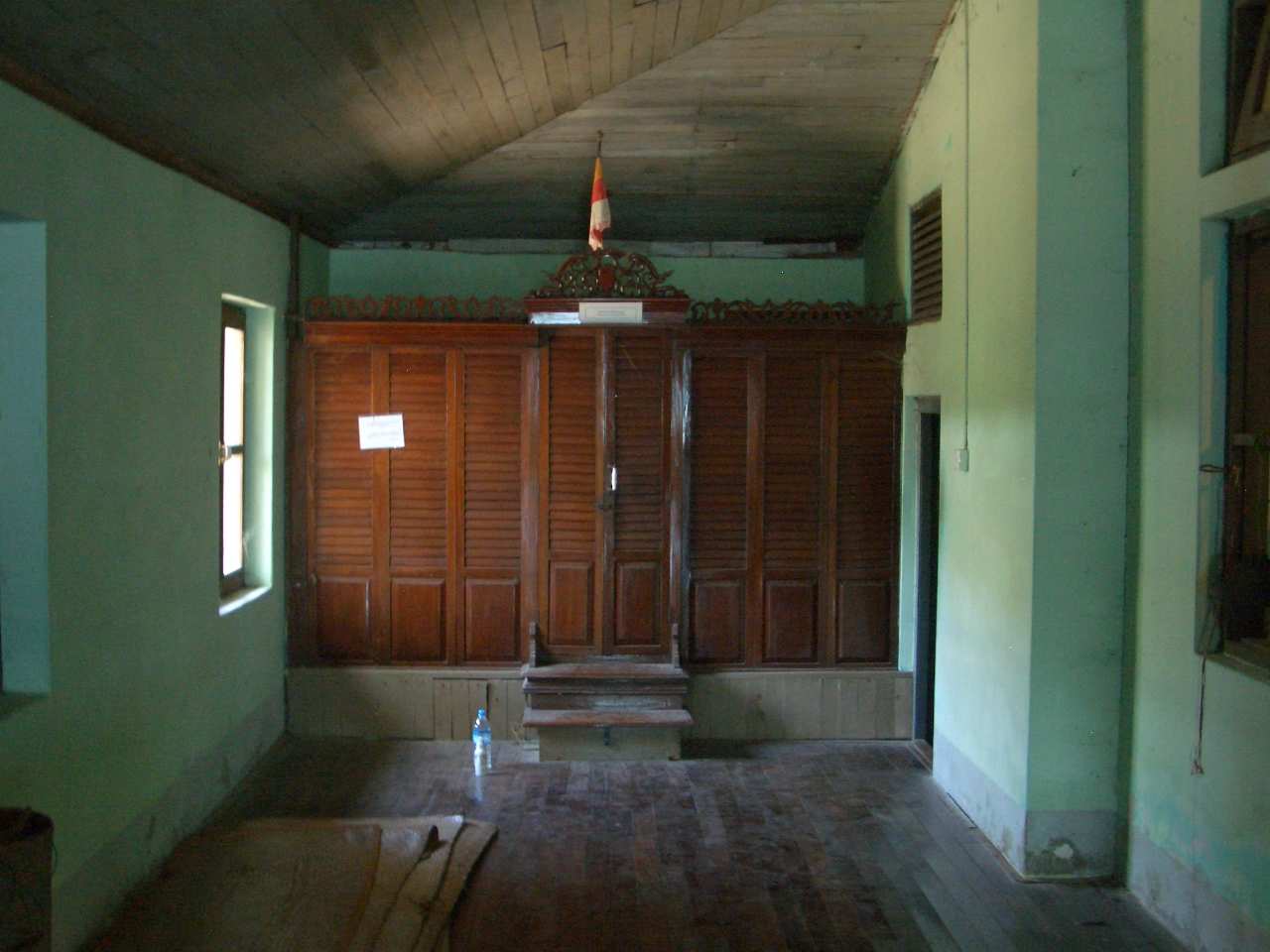


Anagami Saya Thet Gyi's private meditation cell in Pyaw Bwe Gyi Village
The original template for these notes came in the form of a long email message responding to a request by a meditator who was heading to Burma and who had inquired how to best schedule his days while there. This message was later forwarded on to many others who were also hoping to make the trip and were in the process of planning their schedules.  In 2008 this stream-of-consciousness email was organized into document form and revised, and in 2009 was further edited.  This current version may be thus considered the 3rd edition of these notes.


A local NGO run by local meditators organizes a children meditation course for survivors of the 2008 Cyclone Nargis.  (Any donations given to this project will go to this charity for their continued work)


Natural hot springs shower at Webu Sayadaw monastery

For a meditator to visit Burma even just a few years ago, there was no guide of which to speak, and many spent their days trying to figure out first what sites even existed, and then where they were located and how to reach them.  This often left many important places off the list and required more time and effort in tackling logistics than tackling meditation.  Burma guidebooks naturally do exist, but meditators have their own special needs and interests that the standard books often don’t cover.  For example, while yogis generally have less interest in the best bars and beaches, our kind tends to have a far greater desire to learn how to get healthy vegetarian food or communicate about Buddhist principles.      

A group of four meditator set up a makeshift mosquito net for their Vipassana self-course in a Sagaing cave

Pindaya Cave in Shan State

While the first version was simply intending to organize and update existing notes, we as contributors immediately received positive feedback and gratitude, as well as complaints as to what was left out or no longer relevant.  None of us realized the commitment we were thus making to simply format a series of notes!  But here we are now, with a third version that has become even more comprehensive. 


A Sayadaw from a small monastery deep in the Sagaing Hills feeds a monastery dog in the cool morning.

Saturday, 5 January 2013

U Goenka gives Sangha Dana

U Goenka gives Sangha Dana at the Goenka home in Yangon, Myanmar (Burma) to select members of the Sangha on December 22 2012.


Photos and Videos from U Goenka's visit to Myanmar (Burma)

A yogi capturing a picture of U Goenka while giving Sangha Dana
A crowd converging at the Goenka home early in the morning
U Goenka's return to his native land of Burma was celebrated by thousands of Indians, Burmese, and other foreign yogis who converged towards the Golden Land to honor and take part in this historic occasion. Dhamma Joti organized a 10 day yatra (pilgrimage) for nearly 1000 meditators from around the world, and U Goenka gave several speeches to large audiences and led one group sitting at the famed Shwedagon Pagoda.

Many photographers and news crews filming U Goenka
As the purpose of this blog is to greater share and disseminate inspiring photos, videos, essays, and other media related to dhamma in Burma, we are happy to make available any such items that visiting yogis would like to share with the greater community. If you would like to share your own personal photos, videos, or written memories from this trip, please send them to us and we will post them for the benefit of many.  You can email us at burmadhamma@gmail (and please be patient as the account sometimes goes unchecked for long periods of time)

U Goenka and Mata-ji

Thursday, 22 November 2012

Goenkaji's Tour in Burma

As many meditators know, Mr. S.N. Goenka is scheduled to be in Burma (Myanmar) at the end of December 2012.  This blog recently posted information about his trip to further disseminate to yogis interested in coming here to join. 

There are a couple of further pieces of information that are important to add.  First, one meditator happened to stop by Dhamma Joti in Yangon yesterday to clarify the visit, and was told that despite the 10-long posted schedule of the trip, Mr. Goenka's participation will be limited to leading a couple of sittings at Shwedagon Pagoda and giving a couple of Dhamma Talks.  He will not be traveling outside of Yangon, according to the center office, so yogis should consider this beforehand when planning their trip. Also, whether or not a yogi formally registers (e.g. pays the full fees being asked), they are welcome to attend these dhamma talks and sittings.  The registration fee will most likely provide the meditators with room, board, and transportation.  The office also added that Dhamma Joti is now past capacity so they are having to meet the housing needs for additional yogis that register by searching out other sites, including perhaps hotels, guesthouses, monasteries, and other Goenka centers beyond Yangon.

Please note that we are in no way affiliated with the organization itself and these are informal observations we are sharing based on being currently in country, to help provide information.  To confirm any of these points you are encouraged to contact the center directly.

Finally, you should be aware that this is fast becoming the busiest season in Myanmar's history, by a long shot.  There is a very real possibility, even likelihood, that in December and January every available room in Yangon (and other towns) will be taken.  Any yogis are strongly encouraged to make all hotel reservations for their stay as early as possible.  If you've been to Burma before and are used to showing up and taking what's available, it will not work this time.  Make a reservation!!!

Be happy and enjoy your stay in The Golden Land.

Sunday, 18 November 2012

Paññatti

This is a short film that was produced by Raul Saldana and Heidi Che. They took a course of cinematography with the Brazilian director Lazaro Faria. The film explores part of the nature of being alive. It is one of the more beautiful depictions of dhamma in life that one will find.


Monday, 22 October 2012

Paññatti


Paññatti


This is a short film that was produced by Raul Saldana and Heidi Che. They took a course of cinematography with the Brazilian director Lazaro Faria. The film explores part of the nature of being alive. It is one of the more beautiful depictions of dhamma in life that one will find.

Click here for the video.

Saturday, 20 October 2012

The Essential Practice, by Webu Sayadaw


Though you practice without interruption, you will not get tired or exhausted. As you take up the teachings of the Buddha, incomparable happiness will come to you. Some people think that the Buddha taught many different things. You all remember some parts of the holy scriptures as the monks out of great compassion taught them to you. At times you may think, "The teachings of the Buddha are so vast and manifold. I can't follow and understand all this, and therefore I can't attain my goal." Or some people say, "What is true for oneself one can only know oneself." Or others, "I can't work because I can't feel the breath yet." Now tell me, what is your excuse?

-- Webu Sayadaw, from "The Essential Practice."

To read the entire essay, go here for The Essential Practice Part 1, and here for The Essential Practice Part 2.


Webu Sayadaw, framed photo from his monastery